Knowing where to put knives in kitchen is essential for safety and organization. Proper knife storage protects your blades, prevents accidents, and keeps your workspace clean. This guide covers every option from knife blocks to magnetic strips so you can pick what works best for your home.
Key Takeaways
- Knife blocks and magnetic strips are the two most popular and safest storage options for everyday kitchen use.
- Drawer inserts and knife rolls offer portable and space-saving solutions for smaller kitchens.
- Never store loose knives in a drawer without a protective insert or sheath to avoid injuries.
- Where you place knives matters for both safety and blade longevity.
- Regular cleaning and sharpening paired with proper storage keeps knives in top shape.
- Consider your kitchen layout when choosing a storage method to maximize convenience.
📑 Table of Contents
- Why Knowing Where to Put Knives in Kitchen Matters So Much
- Knife Block Storage: The Classic Choice
- Magnetic Knife Strips: The Modern Solution
- Drawer Storage Options for Knives
- Knife Rolls and Cases for Portable Storage
- Best Practices for Kitchen Knife Storage
- Comparison: Knife Storage Options at a Glance
- Common Knife Storage Mistakes to Avoid
- Expert Tips for Organizing Your Kitchen Knife Collection
- Key Takeaways
- Conclusion
Why Knowing Where to Put Knives in Kitchen Matters So Much
Your kitchen knives are some of the most important tools you own. They chop, slice, dice, and prep meals every single day. But here is the thing most people overlook: where to put knives in kitchen matters just as much as how you use them.
Storing knives the wrong way can dull the blades, create safety hazards, and even damage your countertops. A loose knife bouncing around in a drawer is a recipe for disaster. On the other hand, smart storage keeps your blades sharp and your fingers safe.
Think about the last time you prepped ingredients for a classic burger like the In-N-Out Flying Dutchman. You needed a sharp knife to slice the onion, spread the spread, and assemble everything neatly. After that cooking session, where did you put that knife back? The answer to that question affects everything from blade life to kitchen safety.
In this guide, we will walk through every practical option for knife storage in the kitchen. You will learn the pros and cons of each method, get expert tips, and walk away knowing exactly what setup works best for your space.
Knife Block Storage: The Classic Choice
A knife block is probably the first thing that comes to mind when you think about where to put knives in kitchen. It is a standing holder with slots that keep each knife upright and separated. This method has been a kitchen staple for decades, and for good reason.
Why Knife Blocks Work So Well
Knife blocks keep blades protected and easily accessible. They sit on the countertop, so you always know exactly where your knives are. No digging through drawers. No worrying about touching a sharp edge by accident.
Most knife blocks are made from wood, bamboo, or plastic. Wood and bamboo options look beautiful and last for years. They also help absorb some of the vibration when you pull a knife out, which is gentler on the blade.
Here are the main benefits of using a knife block:
- Blade protection: Knives stay separated, so they do not rub against each other and get dull.
- Easy access: You can grab the right knife in seconds.
- Countertop convenience: Keeps your most-used knives right where you need them.
- Child safety: Many blocks have secure slots that prevent knives from falling out.
Drawbacks to Consider
Knife blocks do have some downsides. They take up valuable counter space. They also limit you to the number of slots in the block, so adding new knives later can be tricky. And cleaning inside the block can be a hassle since crumbs and dust collect in the slots over time.
Another thing to keep in mind: not all knife blocks fit every knife style. If you have specialty knives or longer blades, you need to check the slot sizes before buying.
Magnetic Knife Strips: The Modern Solution
If you want a sleek and space-saving option, a magnetic knife strip is worth serious consideration. These strips mount directly to your wall or backsplash and hold knives securely using magnets.
This is one of the most popular answers to where to put knives in kitchen for people who want a clean, modern look. The strip keeps knives visible and within arm’s reach without eating up counter or drawer space.
Benefits of Magnetic Strips
- Saves space: Mounts on the wall, freeing up counters and drawers.
- Easy to clean: No hidden crevices where dirt can build up.
- Looks great: Gives your kitchen a professional, restaurant-style feel.
- Flexible capacity: You can hold as many or as few knives as the strip allows.
Safety Tips for Magnetic Strips
Magnetic strips are very safe when installed correctly. Make sure the strip is mounted high enough that children cannot reach it. Also, check that the magnets are strong enough to hold the knife securely, especially heavier chef’s knives.
One thing to watch out for: some magnetic strips can be too strong for certain knife types. If you have knives with delicate handles, pull them straight down rather than sideways to avoid damaging the handle over time.
Drawer Storage Options for Knives
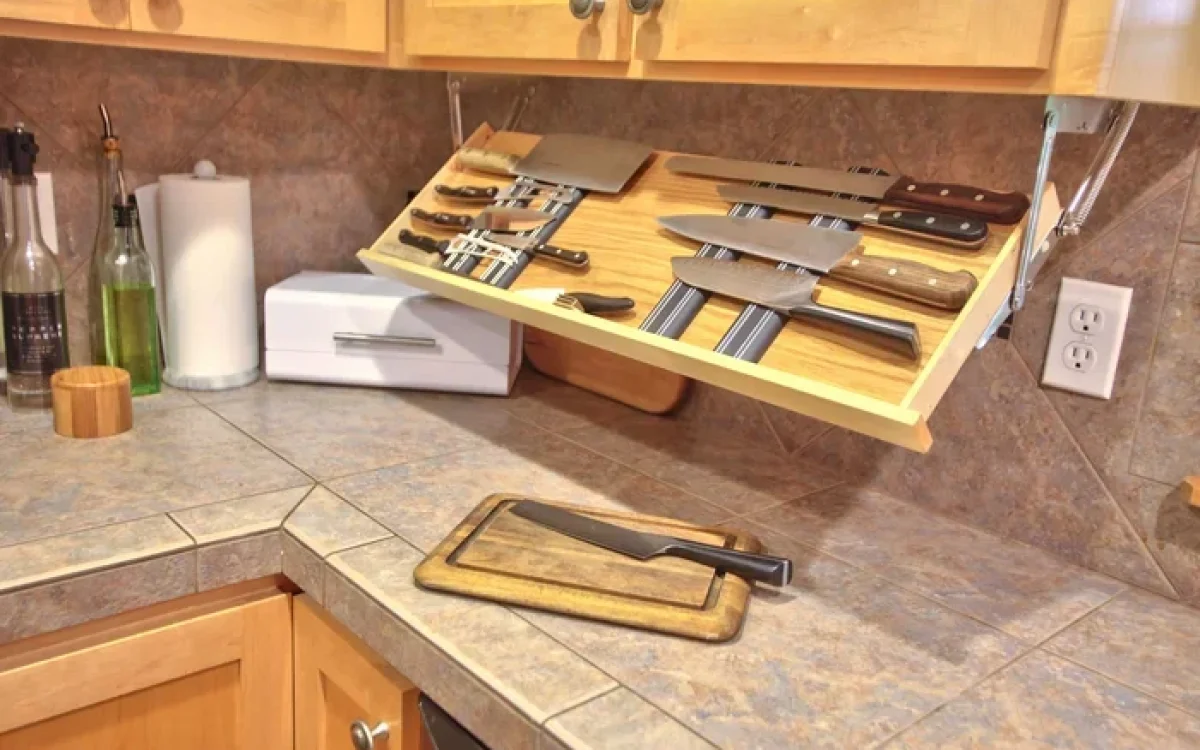
Not everyone has counter space or wall room for a knife block or magnetic strip. That is where drawer storage comes in. Storing knives inside a drawer keeps them hidden and out of the way, which works well for many kitchen layouts.
Knife Drawers With Inserts
A knife drawer insert is a tray that sits inside a drawer and has slots or compartments for each knife. This keeps the blades separated and prevents them from knocking against each other. It is a great option if you want to keep knives tucked away but still organized.
Drawer inserts come in wood, plastic, and bamboo. They are easy to clean and fit inside most standard drawers. You simply slide the tray out, grab your knife, and slide it back in.
DIY Knife Storage in Drawers
If you are on a budget, you can create your own knife storage in a drawer. Some people use a wooden dowel across the drawer to keep knives separated. Others place a rubber mat or foam insert at the bottom to cushion the blades.
Just remember: never store loose knives in a drawer without some form of protection. A bare drawer is a safety hazard and will dull your blades quickly from constant contact with other utensils.
Knife Rolls and Cases for Portable Storage
A knife roll or knife case is a fabric or leather roll that holds knives securely in place. This option is perfect for people who travel, have small kitchens, or want to store knives in a pantry or closet.
Knife rolls are also a smart choice if you are someone who preps food on the go. Think about the setup needed when making something like an In-N-Out Flying Dutchman Burger at home. You need your knife set organized and ready to go, and a roll keeps everything in place.
Why Choose a Knife Roll?
- Portable: Easy to move or store in a closet when not in use.
- Protects blades: Fabric sleeves prevent blades from scratching against each other.
- Space-friendly: Rolls up and tucks away in tight spaces.
- Affordable: Most knife rolls cost less than knife blocks or magnetic strips.
Who Should Use a Knife Roll?
Knife rolls work best for people with limited kitchen space or those who move their knives around frequently. They are also great for outdoor cooking, camping trips, or small apartment kitchens where every inch matters.
Best Practices for Kitchen Knife Storage
No matter which storage method you choose, following a few best practices will keep your knives safe and sharp for years. Here is what the experts recommend for proper knife storage in the kitchen.
Keep Knives Dry and Clean
Always dry your knives thoroughly before putting them away. Moisture causes rust and can damage the handle over time. Wash knives by hand with warm soapy water and dry them immediately. Never put good kitchen knives in the dishwasher.
Store Knives Away from Heat and Moisture
Do not place knife storage near the stove, oven, or dishwasher. Heat and steam can warp wooden blocks and dull blades faster. A cool, dry spot is always the best choice for long-term storage.
Use Blade Guards for Extra Protection
If you store knives in a drawer or travel with them, use blade guards. These are small plastic or silicone sleeves that slide over the blade. They add an extra layer of safety and prevent nicks and scratches.
Rotate Your Knives Regularly
If you use a knife block or magnetic strip, rotate your knives occasionally. This helps distribute wear evenly across all blades. It also gives you a chance to check each knife for damage or dullness.
Comparison: Knife Storage Options at a Glance
Choosing the right storage method can feel overwhelming with so many options available. Here is a quick comparison to help you decide.
- Knife Block: Great for countertop access and blade protection. Takes up counter space.
- Magnetic Strip: Sleek, space-saving, and modern. Requires wall mounting.
- Drawer Insert: Hidden and organized. Limited by drawer size.
- Knife Roll: Portable and affordable. Less convenient for daily use.
- Blade Guards: Best for loose storage or travel. Must be removed before use.
The best choice depends on your kitchen size, budget, and how often you cook. Many home cooks use a combination of methods. For example, a magnetic strip for everyday knives and a roll for specialty blades.
Common Knife Storage Mistakes to Avoid
Even experienced cooks make mistakes when it comes to where to put knives in kitchen. Here are the most common errors and how to fix them.
Mistake 1: Tossing knives in a junk drawer. This is the worst thing you can do for both safety and blade health. Loose knives clash with other utensils and dull quickly.
Mistake 2: Storing knives blade-down in a block. While it might seem safer, storing blades facing down puts unnecessary pressure on the tip and can cause chips over time.
Mistake 3: Overcrowding the storage. cramming too many knives into a small block or strip damages the blades and makes it hard to grab the right one.
Mistake 4: Ignoring handle care. Moisture trapped in the handle can cause warping and cracking. Always store knives in a dry place and wipe handles after washing.
Expert Tips for Organizing Your Kitchen Knife Collection
Professional chefs and kitchen designers share a few insider tips that can make a big difference in how you store and use your knives every day.
Tip 1: Group knives by frequency of use. Keep your most-used knives, like a chef’s knife and a paring knife, in the most accessible spot. Specialty knives like a bread knife or boning knife can go in a secondary storage spot.
Tip 2: Label your slots. If you use a knife block with multiple slots, consider labeling each one. This makes cleanup faster and helps everyone in the household know where each knife belongs.
Tip 3: Pair storage with a sharpener. Keep a knife sharpener near your storage area. This encourages regular maintenance and keeps every blade performing at its best.
Tip 4: Match storage to your kitchen style. If you have a modern kitchen, a magnetic strip fits right in. For a rustic or farmhouse look, a wooden knife block adds warmth and character.
Key Takeaways
- Knife blocks and magnetic strips are the two most popular and safest storage options for everyday kitchen use.
- Drawer inserts and knife rolls offer portable and space-saving solutions for smaller kitchens.
- Never store loose knives in a drawer without a protective insert or sheath to avoid injuries.
- Where you place knives matters for both safety and blade longevity.
- Regular cleaning and sharpening paired with proper storage keeps knives in top shape.
- Consider your kitchen layout when choosing a storage method to maximize convenience.
Conclusion
Figuring out where to put knives in kitchen does not have to be complicated. The right storage method protects your investment, keeps your family safe, and makes cooking more enjoyable every single day.
Whether you choose a classic knife block, a sleek magnetic strip, a hidden drawer insert, or a portable knife roll, the key is consistency. Store your knives the same way every time, keep them clean and dry, and sharpen them regularly.
Start with one change today. Move your knives out of that junk drawer and into a proper storage solution. Your blades will stay sharper longer, and your kitchen will feel safer and more organized. Good knife storage is one of the simplest upgrades you can make, and the results speak for themselves every time you step into the kitchen.
Frequently Asked Questions
What is the safest way to store kitchen knives?
The safest way is to use a knife block, magnetic strip, or drawer insert with slots. These methods keep blades protected and prevent accidental cuts. Avoid loose storage in drawers without any form of blade guard or separator.
Can I store knives on the countertop?
Yes, countertop storage works well with a knife block or magnetic strip. Just make sure the surface is clean and dry. Keep the storage away from the stove and sink to avoid moisture damage.
How do I clean a knife block?
Wipe the inside of the knife block with a damp cloth and mild soap. Let it dry completely before putting knives back in. You can also use a small brush to remove crumbs and dust from the slots.
Are magnetic knife strips safe for all knife types?
Most magnetic strips work well with standard kitchen knives. However, very thin or delicate blades may need extra care. Always pull knives straight down from the strip rather than sliding them sideways.
How often should I sharpen my knives?
A good rule is to sharpen your knives every 2 to 3 months with regular home use. You can also use a honing steel before each cooking session to maintain the edge between sharpenings.
What is the best knife storage for a small kitchen?
For small kitchens, a magnetic strip or a drawer insert works best. Both options save counter and drawer space while keeping your knives organized and accessible.