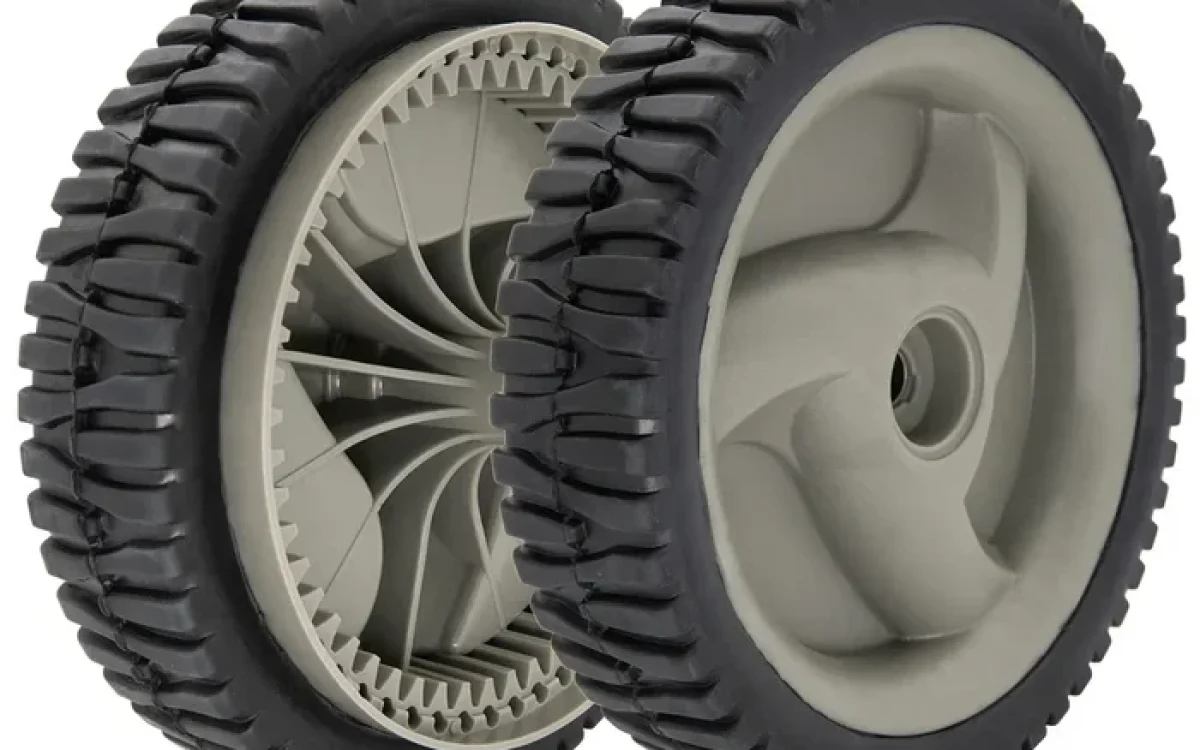
Lawn mower wheels are not universal, and finding the right fit depends on your mower type, deck size, and axle specifications. Whether you own a push mower, riding mower, or zero-turn model, choosing the correct wheel size and bolt pattern is essential for smooth operation and a clean cut. This guide breaks down everything you need to know about lawn mower wheel compatibility, sizing, and replacement.
Key Takeaways
- No, lawn mower wheels are not universal: Different mowers require different wheel sizes, bolt patterns, and axle diameters.
- Push mowers and riding mowers use different wheels: The weight, deck size, and purpose dictate the wheel type.
- Measuring your current wheels is the best way to find replacements: Track diameter, width, bolt pattern, and axle bore.
- Wrong wheels can damage your mower: Using incorrect sizes affects cutting height, traction, and deck level.
- Aftermarket options exist for most models: Many brands sell universal-style adapters and replacement kits.
- Regular maintenance extends wheel life: Simple checks can prevent premature wear and costly replacements.
📑 Table of Contents
- What You Need to Know About Lawn Mower Wheels
- Are Lawn Mower Wheels Really Universal?
- Common Lawn Mower Wheel Sizes and Types
- How to Find the Right Replacement Wheels
- Installing New Lawn Mower Wheels the Right Way
- Maintaining Your Lawn Mower Wheels for Longevity
- Final Verdict: Are Lawn Mower Wheels Universal?
What You Need to Know About Lawn Mower Wheels
If you have ever walked out to your mower and noticed a wobbly or cracked wheel, you are not alone. Lawn mower wheels wear out, crack in cold weather, and sometimes just break under pressure. The first question most homeowners ask is whether they can grab any wheel off the shelf and swap it right on. The short answer is no. Lawn mower wheels are not universal, and understanding why matters more than you might think.
Your mower wheels do more than just roll. They support the deck, control cutting height, and affect how your mower moves across the yard. A wheel that is too small, too large, or the wrong bolt pattern can throw off your entire mowing experience. Choosing the right replacement wheels keeps your mower running smoothly and your lawn looking its best.
Why Your Mower Wheels Matter
Every time you push or drive your mower, the wheels bear the weight of the machine and the deck. They also determine how high or low the cutting deck sits. When a wheel is damaged or the wrong size, your cutting height becomes uneven. That means some patches of grass get cut too short, while others stay long and messy.
Tire size and wheel diameter also affect traction. A worn-out wheel slips on wet grass, leaving ruts and uneven stripes. On the other hand, a properly sized wheel grips the ground and gives you a clean, professional finish. This is why mower wheel compatibility is not just a technical detail, it is a practical necessity.
The Role of Wheels in Lawn Care
Think of your mower wheels as the foundation of your entire mowing setup. They connect the machine to the ground. Without the right wheels, your mower cannot perform at its best. Whether you are using a push reel mower, a gas-powered walk-behind, or a riding lawn mower, the wheels play a critical role.
Here are a few key jobs your mower wheels handle every time you mow:
- Supporting deck height: Wheels set the distance between the blade and the ground.
- Providing traction: Proper wheels grip the turf and prevent slipping.
- Absorbing vibration: Good wheels reduce stress on the engine and deck.
- Ensuring stability: The right wheels keep the mower level on slopes and uneven ground.
When you ignore wheel specifications, you risk uneven cuts, poor maneuverability, and even damage to the mower deck. That is why taking a few minutes to understand your wheel options pays off big time.
Are Lawn Mower Wheels Really Universal?
The idea of universal mower wheels is appealing. Who wants to fuss over measurements when a quick trip to the hardware store could solve the problem? Unfortunately, the reality is more complicated. While some wheels are marketed as universal, true universal fit is rare in the lawn mower world.
Manufacturers design wheels for specific models and deck configurations. A wheel that fits a Honda push mower will not necessarily fit a John Deere riding mower. Even within the same brand, different models use different axle diameters, bolt patterns, and wheel widths.
The Truth About Universal Fitment
When a product label says “universal fit,” it usually means the wheel fits a range of common models, not every mower on the market. Think of it like a one-size-fits-all shirt. It might fit most people, but it will not fit everyone perfectly. The same applies to lawn mower wheels.
Some aftermarket brands do offer adjustable or adapter-based wheels that expand your options. These can work well if you know your mower’s specifications. But for the average homeowner, finding an exact match is always the safest route.
Why One Size Does Not Fit All
Several factors determine which wheels fit your mower. Let us break them down so you understand what to look for when shopping for replacements.
Axle diameter is the first thing to check. Most push mowers use a 1/2-inch or 5/8-inch axle. Riding mowers often use larger diameters, sometimes 3/4 inch or more. If your wheel hole does not match the axle, it simply will not fit.
Bolt pattern is the second factor. This refers to the arrangement of bolts or nuts that secure the wheel to the axle or deck. A four-bolt pattern on one mower might be completely different from a three-bolt pattern on another. Matching the bolt pattern ensures a secure, wobble-free connection.
Wheel diameter and width also matter. A taller wheel raises the deck, changing your cutting height. A wider wheel distributes weight better, reducing ground pressure. Using the wrong dimensions can cause the deck to sit unevenly or the wheels to scrape the ground.
Common Lawn Mower Wheel Sizes and Types
Not all replacement mower wheels are created equal. Different mower types use different wheel configurations. Understanding the common sizes and types helps you shop with confidence.
Push Mower Wheel Dimensions
Most walk-behind push mowers use smaller wheels, typically ranging from 8 to 12 inches in diameter. The wheels are usually narrow, around 4 to 6 inches wide. These compact wheels make it easy to push the mower and maneuver around tight spaces in your yard.
For gas push mowers, the wheels often include a tire with a rubber tread. Electric and battery-powered mowers sometimes use simpler plastic or hard rubber wheels. The axle size for most push mowers is either 1/2 inch or 5/8 inch, which is a standard you will see across many brands.
Riding Mower and Zero-Turn Wheel Specs
Riding mower wheels are much larger and heavier-duty. A typical riding mower uses rear wheels that are 12 to 16 inches in diameter. The front caster wheels are smaller, usually around 8 to 10 inches. These wheels carry more weight and handle more stress, so they are built with reinforced hubs and thicker tires.
Zero-turn mower wheels follow a similar pattern but often have specialized designs. The rear wheels on a zero-turn are large and wide to provide the torque needed for tight turns. The front caster wheels swivel freely, allowing the mower to pivot on a dime. Zero-turn wheel compatibility is especially important because the wheel size directly affects turning radius and maneuverability.
Comparison Table of Common Wheel Sizes
| Mower Type | Rear Wheel Diameter | Front Wheel Diameter | Typical Axle Size |
|---|---|---|---|
| Push Mower (Walk-Behind) | 8-12 inches | 8-12 inches | 1/2 inch or 5/8 inch |
| Riding Mower | 12-16 inches | 8-10 inches | 3/4 inch or larger |
| Zero-Turn Mower | 14-18 inches | 8-12 inches | 1 inch or larger |
| Garden Tractor | 16-20 inches | 10-14 inches | 1-1/4 inch or larger |
This table gives you a general idea of what to expect. However, always check your specific mower model before purchasing. Even within the same mower type, sizes can vary between brands and years.
Quick Tips for Identifying Your Wheel Type
- Check the owner’s manual: It lists exact wheel specifications for your model.
- Measure the existing wheel: Use a tape measure for diameter, width, and axle hole size.
- Count the bolts: Note the bolt count and spacing pattern on your current wheels.
- Look for model numbers: The model number on your mower helps find compatible wheels online.
- Inspect the tire tread: Deep tread means a traction tire, smooth tread means a pavement tire.
How to Find the Right Replacement Wheels
Once you know your mower needs new wheels, the next step is finding the right ones. The good news is that replacement lawn mower wheels are widely available. The challenge is narrowing down the options and picking the best fit.
Measuring Your Current Wheels
Before you buy anything, grab a tape measure and check your existing wheels. Start with the diameter, which is the distance from one side of the wheel to the other, straight through the center. Write that number down.
Next, measure the width of the wheel. This is how thick the wheel is from face to face. A wider wheel provides more stability, while a narrower wheel is lighter and easier to push.
Finally, measure the axle bore, which is the hole in the center of the wheel. This hole needs to fit snugly over your mower’s axle. If the hole is too large, the wheel will wobble. If it is too small, it will not go on at all. A simple measurement saves hours of frustration at the store or online.
Matching Bolt Patterns and Axle Sizes
The bolt pattern on a mower wheel is the arrangement of holes or studs that attach the wheel to the axle or deck mount. Common patterns include four-bolt square patterns and three-bolt triangular patterns. Some mowers use a single-center bolt, while others use a hex hub that screws directly onto the axle.
Matching the bolt pattern exactly is critical. You cannot force a four-bolt wheel onto a three-bolt mount, and vice versa. If you are unsure, take the old wheel with you to the store or snap a clear photo to reference when shopping online.
The axle size is equally important. A 5/8-inch axle requires a wheel with a 5/8-inch bore. Using a wheel with a smaller bore and shimming it is a temporary fix at best and a dangerous shortcut at worst. Always match the axle size precisely for a safe, secure fit.
Quick Tips for Choosing the Best Wheels
- Stick with OEM or brand-approved parts: These are guaranteed to fit your model.
- Read customer reviews: Other mower owners share real-world fit experiences.
- Consider your yard terrain: Rough lawns need knobby tires, while flat lawns work fine with smooth wheels.
- Buy in pairs: Replacing both wheels on an axle ensures even wear and balanced performance.
- Check the weight rating: Heavier mowers need wheels rated for more load.
Installing New Lawn Mower Wheels the Right Way
Swapping out mower wheels is one of the easiest maintenance jobs you can do at home. With the right tools and a little patience, you can have new wheels on in under 30 minutes. Here is how to do it properly.
Tools You Will Need
You do not need a garage full of tools for this job. A basic set of household items will get the job done. Make sure you have the following before you start:
- A socket wrench or adjustable wrench in the right size
- A pair of pliers for pulling clips or retaining rings
- A jack or jack stands (for riding mowers)
- A rag or towel to clean the axle
- The new wheels and any included hardware
- Safety gloves and eye protection
Having everything ready before you start makes the process smooth and frustration-free. There is nothing worse than halfway through a repair and realizing you are missing a tool.
Step-by-Step Installation Guide
Follow these steps to install your new lawn mower wheels safely and correctly.
Step 1: Turn off the mower and disconnect the spark plug. This is a safety step you should never skip. Even if you are working on a push mower, the pull cord can start the engine unexpectedly.
Step 2: Turn the mower on its side. For push mowers, lay it gently on the handle side. For riding mowers, use a jack to lift the affected end off the ground. Always support the mower securely so it does not fall.
Step 3: Remove the old wheel. Locate the bolt or nut holding the wheel in place. Use your wrench to loosen and remove it. Pull the wheel straight off the axle. If it is stuck, a little penetrating oil can help break it free.
Step 4: Clean the axle and hub. Wipe away any dirt, grass clippings, or rust from the axle and the inside of the wheel hub. A clean surface ensures a snug fit for the new wheel.
Step 5: Slide the new wheel onto the axle. Align the bolt holes with the mounting bracket. Push the wheel on firmly until it seats against the deck or axle shoulder.
Step 6: Secure the bolt or nut. Tighten the fastener snugly, but do not over-tighten. Over-tightening can strip the threads or crack the wheel hub. A firm, hand-tight fit is usually sufficient.
Step 7: Repeat for the other wheel. Always replace wheels in pairs on the same axle for balanced performance.
Step 8: Lower the mower and test it. Push or drive the mower a few feet and check for wobbling or rubbing. Adjust if needed.
Common Mistakes to Avoid During Installation
- Forcing a wheel onto the axle: If it does not fit, check the bore size and axle diameter before using excessive force.
- Skipping the spark plug disconnect: This is a safety risk that can lead to accidental engine starts.
- Over-tightening bolts: This damages threads and can crack plastic or aluminum hubs.
- Mixing wheel sizes on the same axle: Uneven wheels cause the deck to sit crooked and the mower to pull to one side.
- Ignoring the direction of rotation: Some wheels are designed for one direction of spin and will not work if mounted backward.
Maintaining Your Lawn Mower Wheels for Longevity
Once you have the right wheels installed, the next step is keeping them in great shape. Proper maintenance extends the life of your mower wheels and saves you money on replacements.
Regular Maintenance Checklist
A few simple habits go a long way toward preserving your wheels. Here is a quick maintenance checklist you can follow every few weeks:
- Inspect wheels for cracks or damage before each mowing session.
- Clean off dirt and grass clippings from the wheel surface and hub.
- Check tire pressure if your mower has pneumatic (air-filled) tires.
- Tighten loose bolts on the wheel mount to prevent wobbling.
- Lubricate the axle if your mower has grease fittings.
- Spin the wheel by hand to feel for grinding or roughness.
Following this checklist takes just a few minutes and catches small problems before they become big ones. A little prevention goes a long way with lawn mower wheel care.
When to Replace Your Wheels Entirely
Even with good maintenance, wheels eventually wear out. Here are the signs that it is time for a full replacement:
- Cracks or splits in the wheel plastic or rubber.
- Flat spots where the wheel no longer rolls smoothly.
- Worn-down tread that no longer grips the grass.
- Wobbling or excessive play in the wheel hub.
- Rust or corrosion that weakens the wheel structure.
- Uneven cutting height caused by a wheel that is shorter than its pair.
If you notice any of these issues, do not wait. Replacing a worn wheel promptly prevents further damage to the deck, blades, and engine. Timely replacement keeps your mower performing like new.
Expert Insights on Wheel Care
Experienced lawn care professionals agree that wheel maintenance is one of the most overlooked aspects of mower upkeep. A quick tip from the pros: store your mower in a dry, sheltered area whenever possible. Exposure to rain, sun, and temperature swings accelerates wheel degradation, especially on plastic and rubber components.
Another pro tip is to keep a spare set of wheels on hand. If you use your mower heavily during the growing season, having a backup set means you are never stuck with a broken wheel and a half-finished yard. Many homeowners keep a small bin of common replacement parts, and mower wheels are a smart addition to that collection.
Finally, consider upgrading to all-terrain or heavy-duty wheels if you frequently mow on rough or hilly terrain. Standard wheels work fine for flat, well-maintained lawns, but upgraded wheels handle bumps, slopes, and thick grass with much more ease. The small investment in better wheels pays for itself in comfort and cutting quality.
Final Verdict: Are Lawn Mower Wheels Universal?
To answer the question directly: lawn mower wheels are not universal. They come in a wide range of sizes, bolt patterns, axle diameters, and load ratings, all designed for specific mower types and models. While some aftermarket wheels claim universal fit, they work best for common configurations and may not match every mower perfectly.
The key to finding the right wheels is simple. Measure your current wheels, check your mower model, and match the specifications exactly. Whether you need wheels for a push mower, a riding mower, or a zero-turn model, the right fit makes all the difference in performance and cut quality.
Taking care of your lawn mower wheels through regular maintenance and timely replacement keeps your mower running smoothly season after season. Do not overlook this small but important part of your lawn care routine. A few minutes of attention to your wheels saves you time, money, and frustration in the long run.
Now that you know the real answer, you are equipped to make the right choice for your mower. Grab your tape measure, check those specifications, and get back to mowing with confidence. Your lawn will thank you for it.
Frequently Asked Questions
Can I use universal lawn mower wheels on any mower?
Some universal-style wheels fit a range of common mowers, but they are not guaranteed to work on every model. Always check the axle size, bolt pattern, and wheel diameter against your mower’s specifications before purchasing. A universal wheel that is close but not exact can cause wobbling or uneven cutting.
What size wheels does my lawn mower need?
The correct wheel size depends on your mower type and model. Push mowers typically use 8 to 12-inch diameter wheels, while riding mowers use 12 to 16-inch rear wheels. Check your owner’s manual or measure your existing wheels to find the exact size you need.
How do I know if my lawn mower wheel is universal fit?
A universal fit wheel will list a range of compatible axle sizes and bolt patterns on the product packaging. However, true universal wheels are rare. The safest approach is to match the exact specifications of your current wheel, including diameter, width, bore size, and bolt pattern.
Can I replace just one lawn mower wheel?
You can replace a single wheel if the others are still in good condition. However, replacing both wheels on the same axle is recommended for balanced performance. Mismatched wheel sizes or wear levels can cause the deck to sit unevenly and result in an inconsistent cut.
Do electric and battery-powered mowers use different wheels than gas mowers?
The wheels themselves are often similar in size and design, but electric mowers tend to be lighter. This means the wheels carry less load and may wear more slowly. The key is still to match the axle diameter and bolt pattern to your specific model, regardless of power source.
How often should I replace my lawn mower wheels?
Most mower wheels last several seasons with proper care. Inspect them at the start of each mowing season for cracks, flat spots, or excessive wear. Replace them as soon as you notice damage, since worn wheels affect cutting quality, deck level, and overall mowing performance.