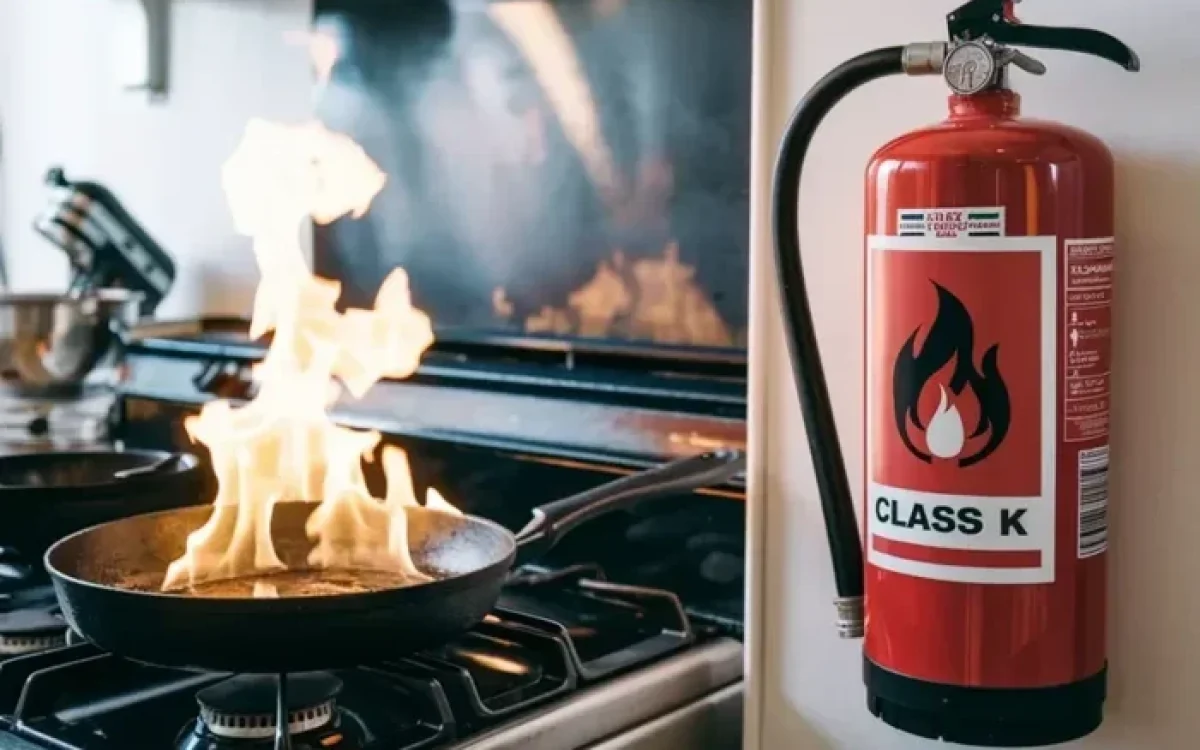
Choosing the right fire extinguisher for kitchen safety is one of the most important decisions a homeowner can make. A Class K fire extinguisher is widely considered the best choice for modern kitchens because it specifically targets cooking oil and grease fires. This guide breaks down every type, rating, and placement tip so you can make a confident, informed decision.
Every year, thousands of house fires start right in the kitchen. Cooking is the number one cause of home fires in the United States. Whether you are sautéing vegetables or frying chicken, a moment of distraction can turn a simple meal into a dangerous situation. That is why having the right fire extinguisher for kitchen use is not just smart, it is essential.
Many homeowners buy a fire extinguisher and then forget about it until disaster strikes. But not all extinguishers work the same way. Different fire types need different suppression methods. Using the wrong one can make things worse. A water extinguisher on a grease fire, for example, can cause a dangerous flare-up. This is exactly why understanding your options matters so much.
In this guide, we will walk through everything you need to know. We will cover the different classes of extinguishers, which ones work best for kitchen fires, how to choose the right size, and where to place it in your home. By the end, you will feel confident about protecting your kitchen and your family.
Key Takeaways
- Class K extinguishers are the gold standard for kitchen fires involving cooking oils and fats.
- Class B and ABC extinguishers also work well for general kitchen fire risks.
- Proper placement within 30 feet of cooking areas ensures quick access during emergencies.
- Regular maintenance and inspection keeps your extinguisher reliable when you need it most.
- Grease fires cannot be extinguished with water, making the right extinguisher essential.
- Cooking oatmeal or other starchy foods can lead to pot fires, so always have an extinguisher nearby when preparing meals.
- Know the PASS method (Pull, Aim, Squeeze, Sweep) for effective fire suppression.
📑 Table of Contents
- Why Every Kitchen Needs a Fire Extinguisher
- Understanding Fire Extinguisher Classes
- Best Fire Extinguisher Types for Kitchens
- How to Choose the Right Fire Extinguisher for Your Kitchen
- Placement and Maintenance Tips
- Quick Tips for Kitchen Fire Safety
- Common Mistakes People Make With Kitchen Fire Extinguishers
- Expert Insights on Kitchen Fire Safety
- Conclusion
Why Every Kitchen Needs a Fire Extinguisher
The kitchen is the most fire-prone room in any home. Stoves, ovens, microwaves, and toasters all generate heat. Add cooking oil, grease, and paper towels to the mix, and you have a serious fire hazard. Even something as simple as boiling water or heating oil for frying can turn dangerous in seconds.
Many people think a fire extinguisher is overkill. But consider this. The average kitchen fire spreads in less than 30 seconds. A small grease fire on the stove can engulf the entire room in minutes. A portable fire extinguisher for kitchen emergencies gives you the tool to act fast. It can mean the difference between a minor incident and a total loss.
Common Kitchen Fire Causes
Understanding what starts kitchen fires helps you prevent them. Here are the most common culprits:
- Unattended cooking. Leaving the stove unattended is the leading cause of kitchen fires. Whether you are simmering sauce or deep-frying turkey, stepping away creates risk.
- Grease splatter. Hot oil can splatter onto burners and ignite. This is especially common when frying at high temperatures.
- Clothing and towels near flames. Loose sleeves or dish towels hanging too close to the stove can catch fire quickly.
- Appliance malfunctions. Toasters, microwaves, and ovens can short-circuit and start a fire without warning.
- Children and pets. Curious kids reaching for stove knobs or pets knocking over pots create real dangers.
Having a kitchen fire extinguisher within reach means you are prepared for any of these scenarios. Prevention is always better than reaction, but even the most careful cook can face an unexpected fire.
Understanding Fire Extinguisher Classes
Not all fires are the same, and not all extinguishers fight the same types of fires. Fire classes are categorized based on what is burning. Choosing the wrong class can be ineffective or even dangerous. Let us break down each class so you know exactly what you are dealing with.
Class A: Ordinary Combustibles
Class A extinguishers handle ordinary combustible materials like wood, paper, cloth, rubber, and many plastics. These fires are common in living rooms, bedrooms, and garages. While a Class A extinguisher alone is not ideal for kitchen fires, it is useful for general home safety.
Class B: Flammable Liquids
Class B extinguishers are designed for flammable liquids such as gasoline, oil, grease, and paint. This is where they become relevant for the kitchen. Cooking oils and fats fall under Class B in many fire classifications. A Class B fire extinguisher for kitchen use can effectively suppress grease fires before they spread.
Class C: Electrical Fires
Class C extinguishers tackle fires involving energized electrical equipment. Think of a toaster catching fire or a wiring short in your oven. Since many kitchen appliances run on electricity, having Class C coverage is a smart addition to your kitchen safety plan.
Class D: Combustible Metals
Class D extinguishers are designed for combustible metals like magnesium, titanium, and sodium. These fires are rare in residential kitchens. They are more common in industrial settings. For most homeowners, a Class D extinguisher is not a priority.
Class K: Cooking Oils and Fats
Class K is the most important class for kitchen fire safety. These extinguishers are specifically designed to combat fires involving cooking oils, fats, and greases. When you heat cooking oil past its flash point, it can ignite spontaneously. A Class K extinguisher uses a wet chemical agent that creates a soap-like foam. This foam cools the oil and forms a barrier that prevents re-ignition.
If you do any frying, sautéing, or deep-cooking, a Class K fire extinguisher for kitchen use is the single best investment you can make.
Best Fire Extinguisher Types for Kitchens
Now that you understand the fire classes, let us look at the best extinguisher options for your kitchen. Each type has its strengths, and the right choice depends on your cooking habits and kitchen setup.
Class K Extinguishers
The Class K fire extinguisher is the top recommendation for any kitchen. It is purpose-built for cooking oil and grease fires. The wet chemical agent works by creating a chemical reaction that turns the burning oil into a non-combustible soap. This effectively smothers the fire and prevents it from reigniting.
These extinguishers are ideal for:
- Home kitchens with deep fryers
- Regular stovetop cooking with oil
- Restaurants and commercial kitchens
- Anyone who frequently cooks with high-heat oils
The downside is that Class K extinguishers are slightly more expensive than other types. They typically cost between $50 and $100. But when you consider the protection they offer, the price is well worth it.
ABC Dry Chemical Extinguishers
The ABC dry chemical extinguisher is the most versatile option. It handles Class A, B, and C fires. This makes it a solid all-around choice for kitchens and homes in general. The monoammonium phosphate powder smothers the fire and interrupts the chemical reaction.
Many homeowners prefer ABC extinguishers because they cover multiple fire types in one unit. They are widely available and affordable. A typical ABC extinguisher costs between $30 and $60.
However, ABC extinguishers have a drawback. The chemical powder can be messy. It can damage your kitchen surfaces, appliances, and cookware. Cleanup after using an ABC extinguisher can be extensive. Still, for general home fire safety, it remains a popular choice.
BC Carbon Dioxide Extinguishers
BC carbon dioxide extinguishers work well for flammable liquids and electrical fires. They discharge a cold CO2 gas that displaces oxygen and smothers the fire. They leave no residue, which makes cleanup easy.
For kitchens, CO2 extinguishers work well for grease fires and appliance fires. However, they do not handle Class A fires effectively. If your kitchen fire involves wood or paper, a CO2 extinguisher will not be enough.
Wet Chemical Extinguishers
Wet chemical extinguishers are very similar to Class K extinguishers. In fact, the terms are often used interchangeably. These units use a potassium-based solution that reacts with cooking oils to form a protective barrier. They cool the oil and prevent re-ignition.
Wet chemical extinguishers are the best choice for any kitchen where cooking oil is used regularly. They are especially effective for deep-frying and high-temperature cooking.
Comparison Table
| Extinguisher Type | Best For | Kitchen Rating | Price Range |
|---|---|---|---|
| Class K | Cooking oils and fats | Excellent | $50-$100 |
| ABC Dry Chemical | General purpose | Good | $30-$60 |
| BC Carbon Dioxide | Grease and electrical fires | Good | $40-$80 |
| Wet Chemical | Cooking oil fires | Excellent | $50-$90 |
The bottom line is that a Class K or wet chemical extinguisher is the best choice for most kitchens. If you want versatility, an ABC extinguisher is a solid backup option.
How to Choose the Right Fire Extinguisher for Your Kitchen
Buying a fire extinguisher is not just about picking one off the shelf. Several factors determine which unit is right for your kitchen. Let us walk through the key considerations.
Consider Your Cooking Style
Do you fry food regularly? Do you use a deep fryer or air fryer? Your cooking habits should guide your choice. If you cook with a lot of oil, a Class K fire extinguisher is the clear winner. If you mostly bake and boil, an ABC extinguisher provides adequate coverage.
Think about your morning routine too. Even something simple like cooking oatmeal for breakfast can lead to a stovetop fire if you leave the pot unattended. A boiling pot of oatmeal can overflow, send starch onto the burner, and ignite. Having the right extinguisher nearby matters in these everyday scenarios.
Check the Rating and Certification
Always look for a UL (Underwriters Laboratories) rating on the extinguisher. The UL rating tells you the extinguisher has been tested and meets safety standards. The rating also indicates how effective the unit is against specific fire types.
For kitchen use, look for a Class K rating at minimum. If you choose an ABC extinguisher, make sure it carries a UL certification. Avoid unlabeled or unrated extinguishers. They may not perform when you need them most.
Size and Weight Matter
Fire extinguishers come in different sizes. The most common sizes for home use are 2-A:10-B:C and 1-A:5-B:C. Larger units hold more extinguishing agent but are heavier. A 5-pound extinguisher is a good balance of coverage and portability for most kitchens.
Consider where you will store the extinguisher. If you have limited counter space or a small kitchen, a compact unit is better. You want something you can grab quickly without struggling with the weight.
Ease of Use
In a fire, you do not have time to read instructions. Choose an extinguisher that is simple to operate. Most modern units follow the standard PASS method:
- Pull the pin to unlock the extinguisher.
- Aim the nozzle at the base of the fire.
- Squeeze the handle to release the agent.
- Sweep from side to side at the base of the flames.
Some extinguishers also come with pressure gauges. These gauges show whether the unit is fully charged and ready to use. Make it a habit to check the gauge monthly.
Placement and Maintenance Tips
Having the right extinguisher is only half the battle. Proper placement and regular maintenance ensure it works when you need it most.
Where to Place Your Kitchen Extinguisher
Place your fire extinguisher for kitchen use near the exit and within easy reach of the cooking area. The goal is to grab it quickly without having to navigate through smoke or flames. Ideally, it should be within 30 feet of the stove.
Here are some placement tips:
- Mount it on the wall at eye level or slightly below.
- Keep it away from the stove but close enough to reach quickly.
- Place it near a doorway so you can exit while using it.
- Do not hide it behind heavy pots or appliances.
- Make sure every adult in the household knows where it is.
Maintenance Schedule
A fire extinguisher is only useful if it is in working condition. Follow this simple maintenance routine:
- Monthly: Check the pressure gauge. Make sure the needle is in the green zone. Give the extinguisher a quick shake to keep the powder from settling.
- Annually: Inspect the extinguisher for any visible damage, rust, or leaks. Check the safety pin and tamper seal.
- Every 5-15 years: Have the extinguisher professionally serviced. Some units need hydrostatic testing to ensure the tank can hold pressure.
- After use: Even a partial discharge means you need to recharge or replace the unit.
Signs You Need to Replace Your Extinguisher
Not all extinguishers last forever. Watch for these warning signs:
- The pressure gauge reads below the green zone.
- The unit is visibly damaged or corroded.
- The tamper seal is broken or missing.
- The extinguisher has been used, even partially.
- The manufacturer recommends replacement after a certain number of years.
Replacing your extinguisher on time is a small price to pay for safety. A failed extinguisher during a fire is worse than having none at all.
Quick Tips for Kitchen Fire Safety
Beyond having the right extinguisher, a few simple habits can dramatically reduce your risk of a kitchen fire. Here are quick tips every homeowner should follow:
- Never leave cooking unattended. This is the single most important rule. If you must leave the room, turn off the stove.
- Keep a lid nearby. A metal lid can smother a small grease fire. Slide it over the pot and turn off the heat.
- Keep flammable items away from the stove. Towels, paper bags, and wooden utensils should stay far from open flames.
- Know how to respond to a grease fire. Never throw water on a grease fire. Smother it with a lid, use baking soda for small fires, or use your extinguisher.
- Install smoke detectors. Test them monthly and replace batteries twice a year. A working smoke detector gives you early warning.
- Create a fire escape plan. Make sure everyone in your household knows what to do if a fire breaks out.
- Keep children away from hot surfaces. Use back burners when possible and turn pot handles inward.
These tips work hand in hand with having a fire extinguisher for kitchen readiness. Prevention and preparedness together create a much safer home environment.
Common Mistakes People Make With Kitchen Fire Extinguishers
Even well-meaning homeowners make mistakes when it comes to kitchen fire safety. Avoiding these common errors can save lives and property.
Buying the Wrong Type
The biggest mistake is buying an extinguisher that does not match your fire risk. A water-based extinguisher will make a grease fire worse. Always match the extinguisher class to the fire type in your kitchen.
Placing It Too Far Away
If your extinguisher is buried in a pantry or stored in the garage, it is not useful during a kitchen fire. Keep it close to the cooking area where you can grab it in seconds.
Ignoring the Expiration Date
Fire extinguishers have a limited lifespan. Most last between 5 and 15 years depending on the type. Check the label for the expiration date and replace the unit when it expires.
Not Teaching Family Members
Your extinguisher is only useful if someone knows how to use it. Teach every adult in your home the PASS method. Even older children should know the basics of fire extinguisher operation.
Using It on a Fire That Is Too Large
Portable extinguishers are designed for small, contained fires. If a fire has spread beyond the stove or oven, evacuate immediately and call 911. Do not try to fight a large fire with a handheld extinguisher.
Expert Insights on Kitchen Fire Safety
Fire safety professionals emphasize that preparation is the key to surviving a kitchen fire. According to the National Fire Protection Association (NFPA), cooking equipment is involved in nearly half of all reported home fires. The NFPA recommends having at least one fire extinguisher for kitchen use on every floor of the home, with special attention to the kitchen area.
Firefighters also stress the importance of staying calm. Panic leads to poor decisions during a fire. If you have a kitchen fire extinguisher within reach and you know how to use it, you have a real advantage. The first few seconds of a fire are critical, and having the right tool ready can change everything.
Many fire departments offer free or low-cost fire safety workshops. These classes often include hands-on extinguisher training. Taking a class can boost your confidence and teach you practical skills that could save a life.
Conclusion
Choosing the best fire extinguisher for kitchen safety does not have to be complicated. A Class K extinguisher is the top choice for most homes because it is specifically designed for cooking oil and grease fires. If you prefer a versatile option, an ABC dry chemical extinguisher covers multiple fire types and fits most kitchen needs.
Remember to place your extinguisher within easy reach, maintain it regularly, and make sure everyone in your household knows how to use it. Combine these steps with good cooking habits and you will be well prepared for any kitchen fire emergency.
Fire safety is not something you want to put off. A few minutes of preparation today can protect your home and your loved ones for years to come. Choose the right extinguisher, keep it maintained, and stay safe.
Frequently Asked Questions
What is the best fire extinguisher for a kitchen?
A Class K fire extinguisher is the best choice for most kitchens. It is specifically designed to combat cooking oil and grease fires, which are the most common type of kitchen fire. If you want a versatile option, an ABC dry chemical extinguisher also works well for general kitchen fire risks.
Can I use a regular fire extinguisher in the kitchen?
Yes, but it depends on the type. A regular ABC extinguisher can handle many kitchen fires including grease and electrical fires. However, for the best protection against cooking oil fires, a Class K extinguisher is specifically formulated for that purpose and is the recommended choice.
How often should I check my kitchen fire extinguisher?
You should check the pressure gauge monthly to make sure it is in the green zone. Inspect the unit annually for damage or leaks. Have it professionally serviced every 5 to 15 years depending on the model and manufacturer recommendations.
Where should I place my fire extinguisher in the kitchen?
Place your fire extinguisher for kitchen use near the exit and within 30 feet of the cooking area. Mount it on the wall at eye level so it is easy to grab in an emergency. Make sure it is not blocked by appliances or cabinets.
Can I use water to put out a kitchen grease fire?
No, never use water on a grease fire. Water causes hot oil to splatter and can make the fire spread rapidly. Use a lid to smother a small fire, baking soda for minor flare-ups, or a proper kitchen fire extinguisher rated for grease fires.
How long does a kitchen fire extinguisher last?
Most kitchen fire extinguishers last between 5 and 15 years. Check the manufacturer label for the specific expiration date. Even if the unit has not been used, replace it after the recommended timeframe to ensure it works properly when needed.