A curved kitchen island brings elegance, extra seating, and better flow to any kitchen space. These islands come in many shapes, sizes, and materials to suit every home. You will learn design ideas, layout tips, material choices, and cost insights. Whether you have a small or large kitchen, a curved island can truly transform your space.
A curved kitchen island can completely change how your kitchen looks and feels. Unlike straight islands, a curved design adds softness and elegance to any room. It also creates natural flow and makes your kitchen feel more open and welcoming. Many homeowners are choosing curved islands because they offer both beauty and practical benefits. If you are planning a kitchen renovation, this guide has everything you need to know.
The idea of a curved kitchen island is not brand new, but it has become hugely popular in recent years. Modern homeowners want kitchens that look stylish and work well for everyday life. A curved island fits perfectly into this vision. It gives you extra counter space, seating, and storage. It also makes your kitchen feel more connected and social. Let us dive into the best ideas and tips for adding a curved island to your kitchen.
Key Takeaways
- Curved kitchen islands improve kitchen flow and create a natural gathering spot.
- You can choose from many materials like granite, quartz, wood, and marble for your island.
- Proper planning and measuring are essential before building or installing a curved island.
- Common mistakes include ignoring traffic flow, choosing the wrong size, and skipping storage.
- A curved island adds both style and function, boosting your home’s value.
- Costs vary widely, but a curved island is a worthwhile investment for most kitchens.
📑 Table of Contents
- Why a Curved Kitchen Island Is a Game-Changer
- Top Curved Kitchen Island Ideas
- Choosing the Right Materials for Your Curved Island
- How to Plan the Perfect Layout for a Curved Kitchen Island
- Common Mistakes to Avoid When Choosing a Curved Kitchen Island
- Expert Tips for a Stunning Curved Kitchen Island
- Curved Kitchen Island Cost Considerations
- Final Thoughts on Curved Kitchen Island Ideas
Why a Curved Kitchen Island Is a Game-Changer
A curved kitchen island does more than just look good. It changes the way you move and work in your kitchen. The soft edges create a natural flow that straight edges simply cannot match. When you walk into a kitchen with a curved island, the space feels open and inviting.
One of the biggest benefits of a curved kitchen island is the extra seating it provides. The curved shape allows you to add more stools without making the space feel cramped. You can turn your island into a casual dining area or a morning coffee spot. This makes your kitchen the true center of your home.
Another advantage is better traffic flow. Straight islands can block movement in a kitchen. A curved design, on the other hand, guides people around the space smoothly. This is especially helpful in open-plan kitchens where the island separates the cooking area from the living space.
Improved Kitchen Flow
The shape of your kitchen island design affects how you move around the room. A curved island creates a gentle curve that naturally directs foot traffic. You will not bump into sharp corners or feel boxed in. This is a big deal in small kitchens where every inch matters.
Better Social Interaction
A curved kitchen island makes it easy to talk to people while you cook. The rounded shape lets you face more people at once. Kids doing homework, guests chatting, and you preparing dinner can all happen at the same time. This is what makes a kitchen truly livable.
Top Curved Kitchen Island Ideas
Now let us explore some of the best curved kitchen island ideas you can use in your home. Each idea brings a unique style and set of benefits.
Curved Peninsula with Bar Seating
This is one of the most popular curved kitchen island styles. The peninsula extends from a wall or countertop and curves outward. You can add bar stools along the curved edge for a sleek look. This style works great in kitchens that need a clear divider between the cooking and dining areas.
The bar seating makes this island perfect for breakfast or quick snacks. You can also use it as a casual workspace. The curved edge softens the look and makes the peninsula feel more inviting than a straight version.
Soft-Edge Island with Built-In Storage
If you love storage, this kitchen island idea is for you. A soft-edge curved island features rounded corners and plenty of cabinets underneath. You can add drawers, shelves, and even a wine rack inside the island. This style keeps your kitchen clutter-free while looking gorgeous.
The rounded edges also make the island safer for families with young children. There are no sharp corners to bump into. This is a smart choice for busy households.
Curved Kitchen Island with Built-In Dining
Want a kitchen island that doubles as a dining table? A curved kitchen island with a built-in dining area is a perfect solution. The curved shape allows you to seat more people comfortably. You can add a long bench on one side and individual stools on the other.
This idea works especially well in open-plan homes where the kitchen and dining room blend together. The curved island creates a natural transition between the two spaces. It also adds a touch of luxury and elegance to the room.
Minimalist Curved Island with Clean Lines
For a modern look, consider a minimalist curved kitchen island with clean lines. This style uses simple materials and a smooth curve to create a sleek appearance. Think white quartz countertops, handleless cabinets, and a polished stone floor.
The minimalist approach keeps the focus on the shape and flow of the island. It works best in kitchens with a contemporary or Scandinavian design style. The result is a clean, calm, and sophisticated space.
Rustic Curved Island with Wood Accents
Love a warm, cozy kitchen? A rustic curved kitchen island with wood accents might be your dream. Use reclaimed wood for the countertop and natural stone for the base. Add open shelves and a thick wooden beam for a farmhouse feel.
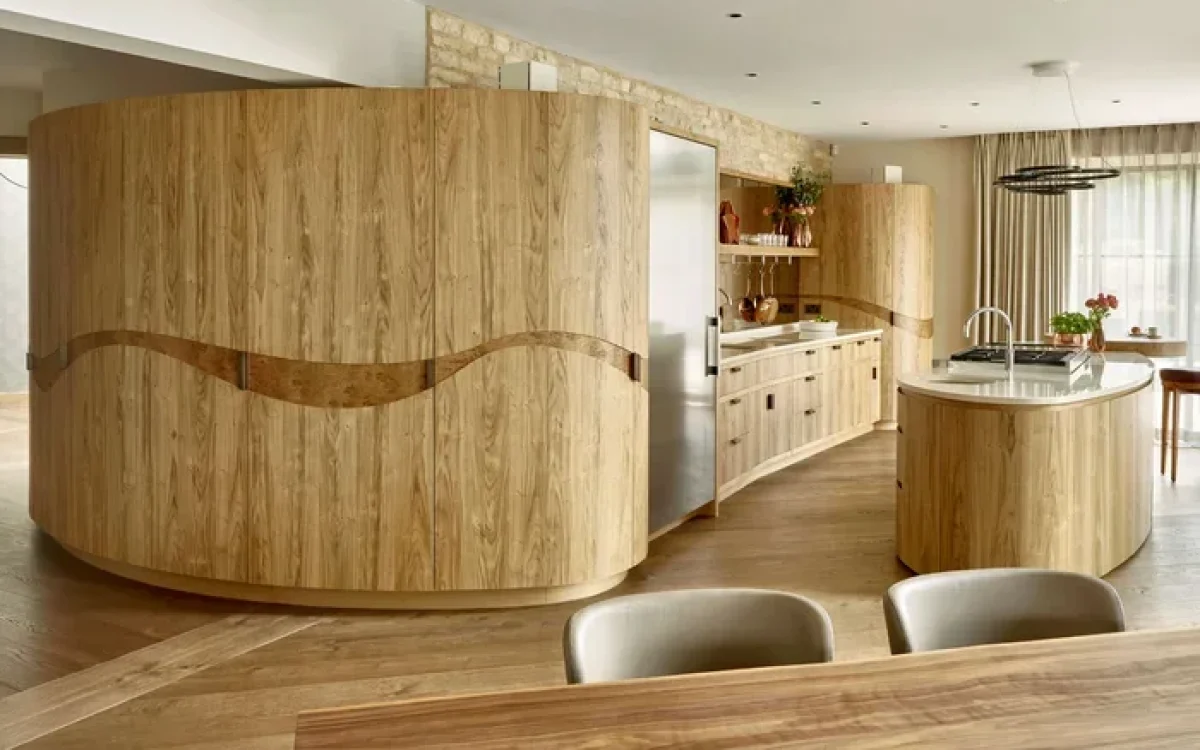
This style brings warmth and character to any kitchen. The curve of the island contrasts beautifully with the natural textures of wood and stone. It creates a space that feels both timeless and inviting.
Choosing the Right Materials for Your Curved Island
The material you choose for your curved kitchen island affects both the look and the durability. Here are some popular options to consider.
Granite vs Quartz for Your Curved Edge
Granite and quartz are two of the most popular choices for a curved countertop. Granite is a natural stone that offers unique patterns and colors. It is very durable and heat-resistant. However, granite requires regular sealing to stay in top shape.
Quartz is an engineered stone that comes in many colors and patterns. It is non-porous, which means it does not need sealing. Quartz is also easier to maintain than granite. Both materials work beautifully for a curved edge because they can be shaped during fabrication.
| Feature | Granite | Quartz |
|---|---|---|
| Durability | Very high | Very high |
| Heat Resistance | Excellent | Good |
| Maintenance | Requires sealing | Low maintenance |
| Color Options | Natural variations | Wide range |
| Cost | Higher | Mid to high |
| Curved Edge Capability | Good | Excellent |
Wood vs Stone for Your Island Top
Wood and stone each bring a different feel to your curved kitchen island. Wood adds warmth and character. It is perfect for rustic or farmhouse kitchens. However, wood requires more care and maintenance than stone.
Stone, including marble and granite, offers a cool and elegant look. Marble is especially popular for its classic beauty. But marble is softer and can stain more easily than granite. Stone is generally a better choice for kitchens with heavy daily use.
Laminate and Budget-Friendly Options
Not everyone has a big budget for a curved kitchen island. Laminate is a great option for those who want a stylish look without the high cost. Modern laminates come in many designs that mimic stone and wood. They are durable, easy to clean, and affordable.
Another budget-friendly option is solid surface material. It can be shaped into curves and comes in many colors. Solid surface is also easy to repair if it gets scratched or damaged. This makes it a smart choice for families with kids.
How to Plan the Perfect Layout for a Curved Kitchen Island
Planning is the most important step when adding a curved kitchen island. A well-planned layout ensures your island looks great and works well. Here is how to get started.
Measuring Your Kitchen Space
Start by measuring your kitchen carefully. You need to know the total square footage and the available space for the island. A curved kitchen island typically needs at least 42 inches of clearance on all sides. This allows enough room for people to move around comfortably.
Measure the length of the wall or area where the island will sit. The curve of the island should follow the natural flow of the room. Avoid placing the island in a way that blocks doorways or windows.
Working with Your Kitchen Flow
The kitchen work triangle is a key concept in kitchen design. It connects the sink, stove, and refrigerator. Your curved kitchen island should complement this triangle, not disrupt it.
Place the island so that it creates a natural path between the main work areas. The curve should guide movement, not block it. Think about how you move in your kitchen every day and let that guide your layout decisions.
Adding the Right Lighting
Lighting can make or break the look of your curved kitchen island. Pendant lights are a popular choice for curved islands. They hang over the island and draw attention to the curve.
You can also add under-cabinet lighting to highlight the countertop edge. LED strips work well for this purpose. The right lighting makes your curved island a beautiful focal point in the kitchen.
Common Mistakes to Avoid When Choosing a Curved Kitchen Island
Even the best ideas can go wrong if you make common mistakes. Here are some pitfalls to watch out for.
Choosing the wrong size: A curved kitchen island that is too big or too small can ruin the look of your kitchen. Always measure your space before you decide on a size. Leave enough room for doors to open and people to walk around.
Ignoring the kitchen workflow: The curve of your island should support how you work in the kitchen. Placing the island in the wrong spot can make your kitchen feel cramped and inefficient. Always think about your daily routine before finalizing the layout.
Skipping storage: A curved island is a great opportunity to add storage. Do not waste this space. Include drawers, cabinets, or open shelves in your design. Storage keeps your kitchen organized and makes the island more functional.
Forgetting about seating: If you plan to use your island for dining or socializing, make sure you include enough seating. The curved shape allows for more stools than a straight island. Use this to your advantage.
Picking the wrong material: Not all materials curve easily. Some materials are harder to shape into a curve than others. Work with a fabricator who has experience with curved edges. This ensures a clean, professional finish.
Expert Tips for a Stunning Curved Kitchen Island
Want your curved kitchen island to look truly stunning? Here are some expert tips to keep in mind.
Match the curve to your kitchen style: The curve of your island should match the overall style of your kitchen. A gentle curve works well in traditional kitchens. A sharp, dramatic curve suits modern spaces.
Use contrasting materials: Pairing different materials adds visual interest. For example, a stone countertop on a wooden base creates a beautiful contrast. This trick makes your island stand out.
Add a waterfall edge: A waterfall edge is when the countertop material wraps down the sides of the island. This looks incredible on a curved island and adds a touch of luxury.
Consider integrated sinks and cooktops: Having a sink or cooktop built into your curved island saves counter space and creates a seamless look. This is a popular choice for modern kitchens.
Do not forget about color: Choose colors that complement your kitchen cabinets and walls. A neutral island color works well in most kitchens. You can add a pop of color with bar stools or decorative accessories.
Quick Tips for a Perfect Curved Kitchen Island
- Always measure your kitchen before choosing an island size.
- Leave at least 42 inches of clearance around the island.
- Choose materials that can be easily shaped into curves.
- Add pendant lights above the island for a focal point.
- Include storage options like drawers and open shelves.
- Match the island style to your overall kitchen design.
- Work with an experienced fabricator for the best results.
Curved Kitchen Island Cost Considerations
The cost of a curved kitchen island varies depending on several factors. Understanding these costs helps you plan your budget wisely.
On average, a curved kitchen island costs between $3,000 and $15,000 or more. The price depends on the size, materials, and complexity of the curve. A simple curved island with laminate countertops will cost less than one with a granite waterfall edge.
Materials are the biggest cost factor. Granite and quartz countertops are more expensive than laminate or butcher block. The base cabinets and frame also add to the cost. Custom curved designs require more labor and skill, which increases the price.
Installation costs can range from $500 to $2,000. A complex curve takes more time and precision to install. It is important to get quotes from multiple contractors before making a final decision.
While a curved kitchen island is an investment, it adds real value to your home. Buyers love kitchens with beautiful islands. A well-designed curved island can increase your home’s resale value significantly.
Budget-Friendly Options
If you are on a tight budget, there are still ways to add a curved island. Laminate and solid surface materials are affordable options. You can also consider a smaller curved peninsula instead of a full island. Even a simple curved design can transform your kitchen without breaking the bank.
When to Invest in a Premium Island
If you plan to stay in your home for many years, investing in a premium curved kitchen island makes sense. High-quality materials like granite or marble will last for decades. A custom-designed curved island is a feature that buyers will love and appreciate.
Final Thoughts on Curved Kitchen Island Ideas
A curved kitchen island is one of the best investments you can make for your home. It adds style, function, and value to your kitchen. Whether you choose a minimalist design or a rustic look, the curve brings a sense of elegance and flow that straight edges simply cannot match.
Take your time planning your curved kitchen island. Measure your space carefully, choose the right materials, and work with experienced professionals. The result will be a kitchen that you love to cook, eat, and gather in every single day.
Start exploring curved kitchen island ideas today and see how this beautiful design element can transform your space. You will be amazed at the difference a simple curve can make.
Frequently Asked Questions
What is the ideal size for a curved kitchen island?
The ideal size depends on your kitchen layout and available space. A curved kitchen island should have at least 42 inches of clearance on all sides. For most kitchens, an island that is 6 to 8 feet long works well. The curve should be gentle enough to allow comfortable seating and movement around the island.
Can a curved kitchen island be added to a small kitchen?
Yes, a curved kitchen island can work beautifully in a small kitchen. The curve takes up less visual space than a straight island with sharp corners. You can choose a compact curved peninsula or a small curved cart to add function without overwhelming the room.
What materials work best for a curved kitchen island countertop?
Quartz and granite are the most popular materials for a curved kitchen island countertop. Both can be shaped into smooth curves during fabrication. Solid surface materials and laminate are also good options, especially for budget-friendly projects. Wood is another choice for a warm, rustic look.
How much does it cost to install a curved kitchen island?
The cost of a curved kitchen island ranges from $3,000 to $15,000 or more. The price depends on the size, materials, and complexity of the curve. Custom curved designs cost more than standard shapes. Installation typically adds $500 to $2,000 to the total cost.
Is a curved kitchen island more expensive than a straight one?
Yes, a curved kitchen island is usually more expensive than a straight one. The curve requires more precise fabrication and installation. Custom curved countertops also cost more than standard rectangular ones. However, the added style and value make it well worth the investment for most homeowners.
Can I add a sink or cooktop to a curved kitchen island?
Absolutely. A curved kitchen island can include a sink, cooktop, or both. Integrated sinks create a seamless look that is easy to clean. A cooktop on the island adds extra workspace and makes the kitchen more social. Just make sure you plan for proper plumbing and electrical connections during the design phase.
=== CONCLUSION ===
A curved kitchen island is a fantastic way to transform your kitchen into a stylish and functional space. From improved flow to extra seating and storage, the benefits are clear. You have learned about the best design ideas, materials, layout tips, and cost considerations. Now it is time to take action.
Start by measuring your kitchen and choosing a design that fits your style and budget. Work with a trusted fabricator or contractor to bring your vision to life. A well-designed curved kitchen island will serve your family for years to come and make your kitchen the heart of your home.