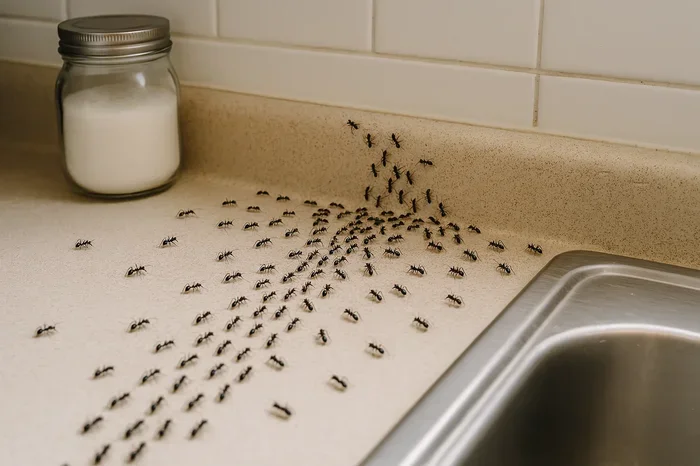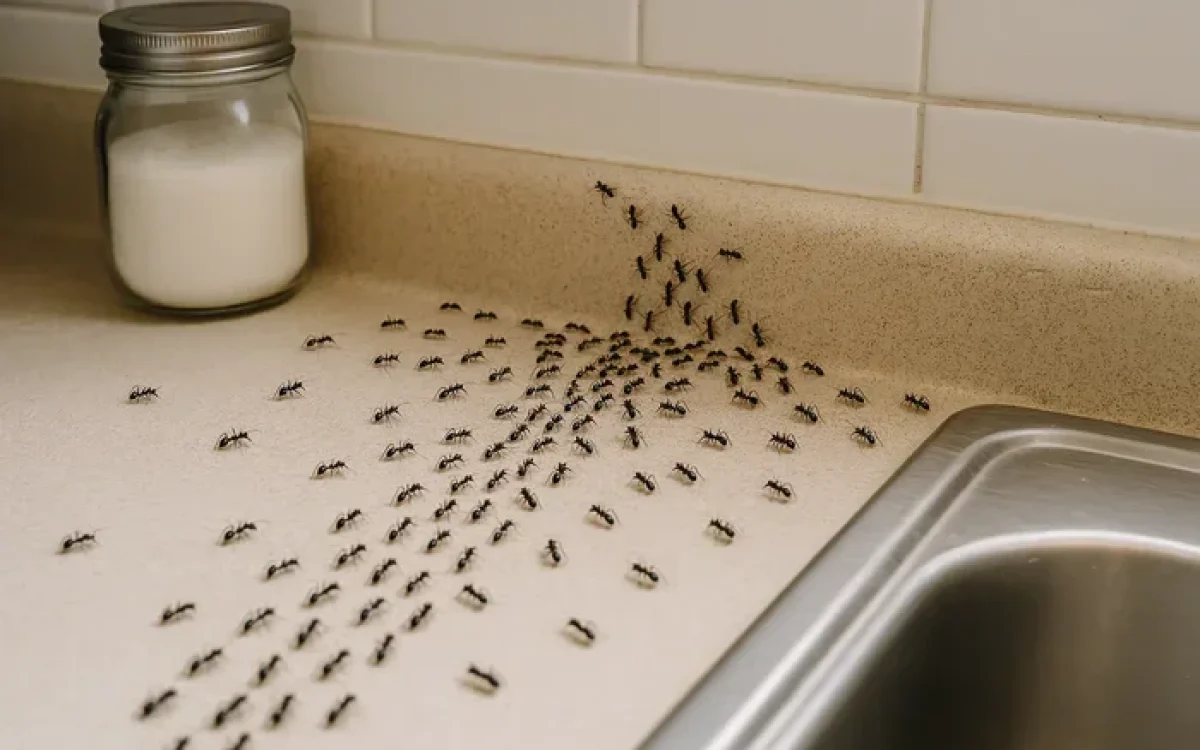
Finding ants in your kitchen is frustrating, but understanding why they are there is the first step to getting rid of them. Ants invade kitchens for three main reasons: food, water, and shelter. This guide covers the top attractants, the most common ant species, and proven methods to eliminate and prevent ants in your kitchen for good.
Key Takeaways
- Food is the #1 attractant: Crumbs, spills, and sweet residues draw ants into your kitchen every day.
- Moisture matters just as much: Leaky pipes and standing water create the perfect environment for ants to thrive.
- Different ants need different solutions: Sugar ants, grease ants, and carpenter ants all require specific treatment approaches.
- Prevention beats reaction: Simple daily habits like wiping counters and storing food properly stop ant problems before they start.
- Natural remedies work well: Vinegar, peppermint oil, and diatomaceous earth are effective and safe ways to repel ants.
- Know when to call a pro: Large infestations or carpenter ant damage warrant professional pest control intervention.
📑 Table of Contents
- Why Do I Have Ants in My Kitchen?
- Common Types of Kitchen Ants
- What Attracts Ants to Your Kitchen?
- How to Get Rid of Ants in Your Kitchen
- Preventing Ants from Coming Back
- Quick Tips for Dealing with Ants in My Kitchen
- Common Mistakes People Make When Dealing with Kitchen Ants
- Expert Insights on Kitchen Ant Control
- Conclusion
Why Do I Have Ants in My Kitchen?
You are not alone. Almost every homeowner has dealt with ants in the kitchen at some point. Those tiny invaders seem to appear out of nowhere, marching across your countertops in a straight line. It is annoying, messy, and honestly a little creepy.
The truth is, ants do not just wander into your kitchen by accident. They follow a purpose. Your kitchen offers them exactly what they need to survive. Understanding why they are there is the first step toward solving the problem. Once you know what draws them in, you can take the right steps to kick them out and keep them out.
This article breaks down the real reasons ants choose your kitchen, the types of ants you are likely dealing with, and the most effective ways to get rid of them. We also cover simple prevention tips that make a huge difference. Let us get into it.
Common Types of Kitchen Ants
Not all ants are the same. Different species invade kitchens for different reasons and require different approaches. Knowing which type you are dealing with helps you choose the right solution.
Sugar Ants
Sugar ants are the most common kitchen invaders. They are small and range from light brown to black. These ants have a sweet tooth. They flock to spilled soda, fruit juice, candy, and any open food with sugar. Sugar ants follow strong trails and can show up in huge numbers overnight.
Grease Ants
Grease ants, also called grease trail ants, are drawn to protein and fat. They love crumbs from meat, cheese, butter, and cooking oils. If you notice tiny ants near your stovetop or around food packaging, grease ants are likely the culprit. They are smaller than many other species and move quickly.
Pavement Ants
Pavement ants usually nest outdoors under rocks and sidewalks. But they invade kitchens in search of food, especially during warmer months. They are slightly larger than sugar ants and often appear in your kitchen after heavy rain or when their outdoor nest gets disturbed.
Carpenter Ants
Carpenter ants are a bigger concern. They are larger than most kitchen ants, usually black or dark red. Unlike other ants, carpenter ants chew through wood to build their nests. If you see large ants in your kitchen, especially near wooden structures, you may have a carpenter ant problem that needs immediate attention.
Moisture Ants
Moisture ants are attracted to damp environments. If your kitchen has a leaky pipe, a wet spot under the sink, or poor ventilation, moisture ants may move in. They build nests in wet wood and soft materials. Fixing moisture issues is the first step to removing them.
What Attracts Ants to Your Kitchen?
Ants are not random. They are driven by three basic needs: food, water, and shelter. Your kitchen provides all three in abundance. Here is a closer look at what draws them in.
Food Sources
Food is the biggest reason ants enter your kitchen. Even tiny crumbs are enough to attract a whole colony. Common kitchen attractants include:
- Spilled sugar or honey on countertops
- Open food packages with small holes
- Dirty dishes left in the sink overnight
- Fruit bowls with overripe or bruised fruit
- Crumbs from snacks like chips and cookies
- Grease buildup around the stove and backsplash
Even something as simple as eating a favorite like the In-N-Out Flying Dutchman Burger in the kitchen can leave behind crumbs and grease that attract ants. Those savory burger toppings and sauces are exactly what ants are looking for. The same goes for enjoying a Flying Dutchman Burger 2 while watching TV in the kitchen. Those cheese and sauce drips are ant magnets.
Water Sources
Ants need water to survive, especially during dry months. A leaky faucet, a dripping refrigerator, or a wet sponge left on the counter can attract ants from surprising distances. Moisture ants in particular seek out damp areas. Check under your sink and around your dishwasher for hidden leaks. Even a small drip can create a water source that draws ants inside.
Shelter and Warmth
Your kitchen offers ants warmth and hiding spots. Cracks in the walls, gaps around windows, spaces behind appliances, and openings around pipes all make perfect nesting spots. During cold weather, ants move indoors to find warmth. Your kitchen, with its consistent temperature and hidden nooks, becomes an ideal shelter.
Scent Trails
Once a scout ant finds food in your kitchen, it leaves a scent trail for the rest of the colony to follow. This is why you suddenly see a long line of ants marching across your counter. The trail is invisible to you but powerful to ants. Even a tiny residue from a sticky jar or a food spill can trigger a full-scale invasion. This is why cleaning up spills immediately matters so much.
How to Get Rid of Ants in Your Kitchen
Now that you know why ants are in your kitchen, let us talk about how to get rid of them. There are several effective methods, from natural remedies to store-bought products. The right approach depends on the size of the problem and the type of ants you are dealing with.
Clean Thoroughly and Eliminate Attractants
The first step in ant removal is simple but essential. Deep clean your kitchen to remove the things that attract ants.
- Wipe down all countertops with soapy water
- Sweep and mop the floor, paying attention to corners and under appliances
- Take out the trash and clean the trash can
- Store all food in airtight containers
- Wash dirty dishes immediately after meals
- Wipe up spills right away, especially sweet liquids
- Clean under and behind the stove and refrigerator
A thorough cleaning removes the scent trails that guide ants to your food. Without a trail, the ants lose their way back to the colony. This alone can solve a small ant problem.
Use Natural Ant Repellents
Many natural remedies are highly effective at repelling ants. These are safe, affordable, and work well for mild to moderate infestations.
Vinegar Solution. Mix equal parts white vinegar and water in a spray bottle. Spray it directly on ant trails, countertops, and entry points. The strong smell disrupts their scent trails and keeps them away. Wipe surfaces with this solution daily for the best results.
Peppermint Oil. Ants hate the smell of peppermint. Mix 10 to 15 drops of peppermint essential oil with water in a spray bottle. Spray it around windowsills, doorways, and along baseboards. This creates a natural barrier that ants do not want to cross.
Diatomaceous Earth. This natural powder is deadly to ants but safe for humans and pets. Sprinkle food-grade diatomaceous earth along ant trails, under appliances, and near entry points. The tiny particles damage the ants exoskeleton and dehydrate them. It works slowly but is very effective.
Boric Acid and Sugar Bait. Mix a small amount of boric acid with sugar and water to create a homemade ant bait. Place small drops near ant trails. The ants carry the bait back to the colony, which kills the queen and the entire nest. This is one of the most effective ant removal methods for serious infestations.
Try Store-Bought Ant Baits and Sprays
If natural remedies do not do the trick, over-the-counter ant products can help. Look for gel baits that ants carry back to their colony. Sprays kill ants on contact but may not solve the root problem. Baits are more effective because they target the entire colony, not just the ants you can see.
Seal Entry Points
Ants can enter through the tiniest cracks. Inspect your kitchen thoroughly for gaps and seal them with caulk. Focus on areas around windows, doors, pipes, and baseboards. A simple tube of caulk can block dozens of entry points and stop ants from coming back.
When to Call a Professional Pest Control Service
Sometimes, do-it-yourself methods are not enough. If you have a large infestation, ants keep coming back despite your efforts, or you suspect carpenter ants are damaging your home, it is time to call in the pros. Professional pest control services have access to stronger treatments and can identify hidden nests that you cannot reach on your own.
Preventing Ants from Coming Back
Getting rid of ants is only half the battle. The real challenge is keeping them from returning. Prevention is the key to long-term ant control. Here are the habits that make the biggest difference.
Maintain Daily Kitchen Cleanliness
Make kitchen cleaning a daily habit. Wipe counters after every meal. Do not leave dirty dishes in the sink overnight. Sweep the floor before bedtime. These small actions remove the food sources that attract ants in the first place.
Store Food Properly
Transfer all dry goods into airtight containers. Keep fruit in the refrigerator instead of on the counter. Seal pet food tightly. Even a slightly open bag of chips can attract ants within hours. Proper food storage is one of the simplest and most effective ant prevention strategies.
Fix Moisture Problems
Repair leaky faucets and pipes promptly. Dry out wet areas under the sink. Use a dehumidifier if your kitchen tends to be damp. Eliminating moisture removes a major reason ants invade.
Regularly Inspect for Ant Activity
Make it a habit to check for early signs of ants. Look for small trails near windows, counters, and food storage areas. Catching an ant problem early makes it much easier to handle. A few ants today can become a full colony in just a few days.
Use Preventive Barriers
Apply a line of diatomaceous earth or peppermint oil spray along your kitchen baseboards and entry points on a regular basis. These barriers create a natural defense that discourages ants from entering your kitchen in the first place.
Quick Tips for Dealing with Ants in My Kitchen
Here are some fast, practical tips you can use right away:
- Wipe counters with vinegar every night. This removes scent trails and deters ants from returning.
- Take out the trash every evening. Overnight trash is a major attractant for kitchen pests.
- Seal cracks with caulk. Check windows, doors, and pipe entries for gaps and seal them immediately.
- Keep fruit in the fridge. Overripe fruit on the counter is one of the top food sources for sugar ants.
- Clean under appliances weekly. Crumbs and spills build up behind and under your stove and fridge.
- Use bay leaves in pantry shelves. Bay leaves naturally repel ants and other pantry pests.
- Do not leave pet food out overnight. Pet bowls attract ants just as quickly as human food does.
Common Mistakes People Make When Dealing with Kitchen Ants
Many people make mistakes that make ant problems worse. Avoid these common pitfalls to get better results.
Only spraying visible ants. Killing the ants you see does not solve the problem. The colony is still there, and more ants will follow. Always target the source with baits or natural repellents that reach the nest.
Ignoring the scent trail. If you do not clean up ant trails properly, new ants will follow the same path. Use vinegar or soapy water to completely erase the trail.
Leaving food out in the open. Even a single open bag of sugar or a fruit bowl can sustain an ant colony. Store everything properly and clean up spills immediately.
Using the wrong bait. Different ants prefer different foods. Sugar ants need sweet baits, while grease ants need protein-based baits. Using the wrong bait means the ants ignore it entirely.
Waiting too long to act. A few ants today can become a major infestation within days. The earlier you take action, the easier it is to control the problem.
Expert Insights on Kitchen Ant Control
Pest control professionals agree that the most effective approach combines immediate removal with long-term prevention. Start by identifying the ant species and locating the source of the attraction. From there, use a combination of cleaning, baiting, and sealing entry points. Most kitchen ant problems can be resolved within one to two weeks using consistent methods.
Experts also emphasize that outdoor maintenance plays a big role. Trim tree branches away from your roof, keep mulch away from your foundation, and remove standing water in your yard. These outdoor steps reduce the likelihood of ants ever reaching your kitchen in the first place.
Conclusion
Dealing with ants in my kitchen is never fun, but it is a problem you can solve. The key is understanding what draws them in and taking consistent action to remove those attractants. Clean your kitchen thoroughly, seal entry points, use the right baits or repellents, and maintain good daily habits.
Whether you are fighting sugar ants, grease ants, or carpenter ants, the strategies in this guide will help you take back your kitchen. Start with the basics, stay consistent, and do not hesitate to call a professional if the problem gets out of hand. A clean, ant-free kitchen is absolutely within your reach.
Remember, prevention is always easier than treatment. A few simple daily habits can save you from a full-blown ant invasion. Keep your kitchen clean, keep food sealed, and keep moisture under control. Your kitchen will stay ant-free all year long.
Frequently Asked Questions
Why do ants keep coming back to my kitchen even after I clean?
Ants leave scent trails that survive regular cleaning. You need to use vinegar or soapy water to completely erase these trails. Also, there may be a hidden food source or moisture problem you have not addressed yet. Check under appliances and inside cabinets for overlooked spills or crumbs.
What is the fastest way to get rid of ants in the kitchen?
The fastest method is a combination of wiping down surfaces with vinegar, spraying ants directly with soapy water, and placing ant bait stations near their trail. The bait kills the colony from the inside, which provides the most permanent solution quickly.
Are kitchen ants dangerous?
Most kitchen ants are not dangerous. They are mainly a nuisance and can contaminate food. However, carpenter ants can cause structural damage to wooden parts of your home. If you notice large ants or sawdust-like material near wooden structures, contact a pest control professional right away.
Can I use bleach to kill ants in my kitchen?
Bleach can kill ants on contact and remove scent trails, but it is not a long-term solution. Bleach is harsh and can damage kitchen surfaces. Natural alternatives like vinegar and peppermint oil are safer and just as effective for everyday ant control.
How do I find where ants are entering my kitchen?
Follow the ant trail backward from your kitchen counter to the entry point. Ants usually enter through small cracks near windows, doors, pipes, or baseboards. Look for tiny gaps and seal them with caulk to block their entry.
Do ants go away on their own?
Ants may reduce in number if you remove their food and water sources, but they rarely go away completely on their own. The colony continues to grow underground. Taking active steps to eliminate attractants and treat the nest is the best way to fully resolve an ant problem.